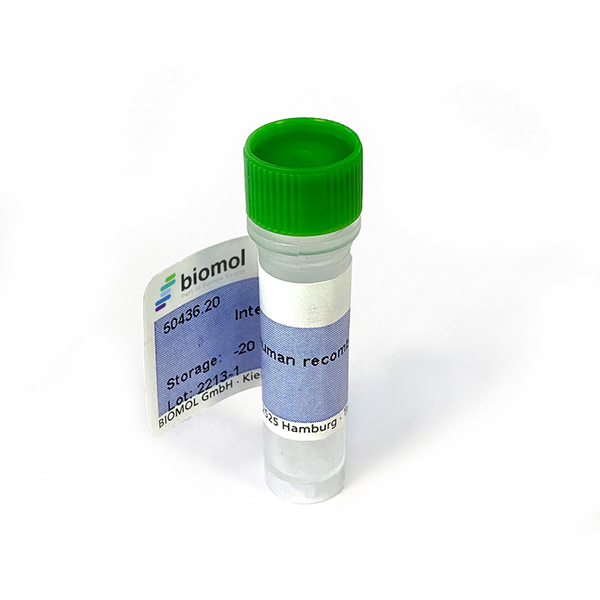
Erythropoietin is the principal hormone involved in the regulation of erythrocyte differentiation and the maintenance of a physiological level of circulating erythrocyte mass. (www.uniprot.org) Produced in CHO cells. Single polypeptide chain containing 165 amino acids. Predicted molecular mass of 21,000 Dalton and apparent glycosylated molecular mass of 30,400 Dalton. The Specific Activity was found to be 120,000IU/mg.
Introduction This gene is a member of the EPO/TPO family and encodes a secreted, glycosylated cytokine composed of four alpha helical bundles. The protein is found in the plasma and regulates red cell production by promoting erythroid differentiation and initiating hemoglobin synthesis. This protein also has neuroprotective activity against a variety of potential brain injuries and antiapoptotic functions in several tissue types.
Description
Erythropoietin-alpha Human Recombinant is produced in Chinese hamster ovary (CHO) cells by recombinant DNA technology is a single, polypeptide chain containing 166 amino acids and having a predicted molecular mass of 21,000 Dalton and apparent glycosylated molecular mass of 36-40kDa Dalton. EPO-a is purified by proprietary chromatographic techniques.
Source Chinese Hamster Ovary Cells(CHO).
Physical Appearance Sterile Filtered White lyophilized (freeze-dried) powder.
Formulation
Each mg of lyophilized powder contains 0.59 mg sodium citrate, 0.58 mg sodium chloride and 0.006 mg citric acid.
Solubility
It is recommended to reconstitute the lyophilized Epoetin-a in sterile 18M-cm H2O not less than 100µg/ml, which can then be further diluted to other aqueous solutions.
Stability Lyophilized Erythropoietin-a although stable at room temperature for 3 weeks, should be stored desiccated below -18°C. Upon reconstitution EPO-alpha should be stored at 4°C between 2-7 days and for future use below -18°C. For long term storage it is recommended to add a carrier protein (0.1% HSA or BSA). Please prevent freeze-thaw cycles.
Purity Greater than 98.0% as determined by: (a) Analysis by RP-HPLC. (b) Analysis by SDS-PAGE.
4.Title:Cell Therapy with Human Renal Cell Cultures Containing Erythropoietin-Positive Cells Improves Chronic Kidney Injury. Publication:First Published Online May 3, 2012 doi: 10.5966/sctm.2011-0048 Stem Cells Trans Med May 2012 vol. 1 no. 5 373-383 Link:http://stemcellstm.alphamedpress.org/content /1/5/373.full